Step 3 – Insight

Step 3 – Insight

Step 3 – Insight

Our unique 4Steps™ approach allows us to acquire the necessary skills that allow us to become more centered and balanced. Insight is the third step. It teaches us how to dig deeper and understand those active beliefs in greater detail.

Practicing consistently is the key to mastering new skills.

Step 2 – Compassion

Step 2 – Compassion

Step 2 – Compassion

Our unique 4Steps™ approach allows us to acquire the necessary skills that allow us to become more centered and balanced. Compassion is the second step. It teaches us to be kind to ourselves as we become more mindful.

Practicing consistently is the key to mastering new skills.

Step 1 – Mindfulness

Step 1 – Mindfulness

Step 1 – Mindfulness

Our unique 4Steps™ approach allows us to acquire the necessary skills that allow us to become more centered and balanced. Mindfulness is the first step, and it’s all about becoming more aware of what is going on around us and within us.

Practicing consistently is the key to mastering new skills.

Processing Your Experiences

Processing Your Experiences

Your active beliefs cause your feelings, which play out in your body.  When you place your feelings (body sensations) into context they are your emotions.  These emotions drive your decisions and actions.  Mindfulness helps us be more aware of all the aspects of our experiences and how we process them.

Practicing consistently is the key to mastering new skills.

Visualizations:  Thoughts Emotions and Body

Visualizations: Thoughts Emotions and Body

Visualizations: Thoughts Emotions and Body

About This Visualization

Visualizations are very similar to meditations in that they are mental training exercises.  Visualizations typically are used to help implant or reframe our beliefs into something more positive.  The more you repeat a story, the more you will buy into it.  The brain will also change and create neural connections that help make that mental pattern more automatic.  This growth process is called neuroplasticity.

In This Exercise:

This visualization allows us to see our thoughts, emotions and body sensations from a different perspective.  We see them as just things that come and go.  We learn that we do not have to buy into them.

About Micro Practices

In your everyday life, you can use what you have learned in your meditation practice by noticing how you are feeling, refocusing on what is present and conducting a three-breath practice.  You can do these as many times as you want throughout your day.  They are a great way to remind yourself of your learning and growing.  Best of all, they take less than a minute to do.

Practice this micro exercise throughout your day…
  1. Breathe and become present.
  2. Breathe and notice what’s around.
  3. Breathe and recite one of the affirmations in this practice.

Practicing consistently is the key to mastering new skills.

Writing Exercise:  Things That Make Me Smile

Writing Exercise: Things That Make Me Smile

Writing Exercise: Things That Make Me Smile

About this Writing Exercise

Reflective journaling is a great way to gain a deeper understanding of what motivates you in your life.  Use these insights when things aren’t going your way.  These stories are ones you can draw upon to shift your mindstate.

In this exercise, you can use the audio file as a timer, and it will also guide you through this exercise.

What’s in this exercise?

You will be journaling about things that make you smile. This is handy when we are overly focused on the perceived negativity that is around us and it consciously makes us look for things that are good.

Exercise Process

Journal: 6 Minutes

  • Finish this statement: “Things that make me smile are…”
  • Keep your pencil moving.
  • If you run out of things to write, then write down, “I have nothing to write…”

Reflection Exercise: 2 Minutes

  • Read what you wrote.
  • Reflect on the positive aspects of what you wrote.
  • Notice how you feel.

Compassionate Breathing Exercise: 2 Minutes

  • Breathe and bring some kindness and support into yourself.
  • You are not alone in this.
  • You are learning to get better.
  • You will be able to move forward.
  • Remind yourself to be kind if you stumble along the way.

About Micro Practices

In your everyday life, you can use what you have learned in your meditation practice by noticing how you are feeling, refocusing on what is present and conducting a three-breath practice.  You can do these as many times as you want throughout your day.  They are a great way to remind yourself of your learning and growing.  Best of all, they take less than a minute to do.

Practice this micro exercise throughout your day…
  1. Breathe and become present.
  2. Breathe and notice what’s around.
  3. Breathe and recall something you learned in this practice.

Practicing consistently is the key to mastering new skills.

Affirmations: Being Grateful

Affirmations: Being Grateful

Affirmations: Being Grateful

About These Affirmations

Reciting affirmations does work.  Neuroscience tells us that with the repetition of any mental exercise new neural pathways are created.  This in turn allows the brain to automatically process our experiences in a similar way.

This audio file will guide you through 3 different affirming prompts, each lasting 3 minutes. You will be reciting or repeating these affirmations over and over again. There is no need to rush through these statements. Be gentle and kind, and consistent with your practice.


You can do these affirmations in the following ways:
  • Meditate and recite them repeatedly.
  • Write them down repeatedly.
  • Recite them to yourself in the mirror.
  • Recite them to your hurt inner child.

We go through life thinking we are stuck in pessimism.  Rest assured, you can learn and grow to be more optimistic using gratitude.  Feel trust that you can learn what you need to learn to move forward. 

Statements in this Practice
  • “I am grateful for the people around me.”
  • “I am grateful for my abilities.”
  • “I am grateful for the wonderful things in my life.”

About Micro Practices

In your everyday life, you can use what you have learned in your meditation practice by noticing how you are feeling, refocusing on what is present and conducting a three-breath practice.  You can do these as many times as you want throughout your day.  They are a great way to remind yourself of your learning and growing.  Best of all, they take less than a minute to do.

Practice this micro exercise throughout your day…
  1. Breathe and become present.
  2. Breathe and notice what’s around.
  3. Breathe and recite one of the affirmations in this practice.

Practicing consistently is the key to mastering new skills.

Affirmations:  Appreciation and Love

Affirmations: Appreciation and Love

Affirmations: Appreciation and Love

About These Affirmations

Reciting affirmations does work.  Neuroscience tells us that with the repetition of any mental exercise new neural pathways are created.  This in turn allows the brain to automatically process our experiences in a similar way.

This audio file will guide you through 3 different affirming prompts, each lasting 3 minutes. You will be reciting or repeating these affirmations over and over again. There is no need to rush through these statements. Be gentle and kind, and consistent with your practice.


You can do these affirmations in the following ways:
  • Meditate and recite them repeatedly.
  • Write them down repeatedly.
  • Recite them to yourself in the mirror.
  • Recite them to your hurt inner child.

We go through life thinking we are stuck and then settle into a label we and others have placed on ourselves.  Learn to appreciate yourself.  Rest assured, you can learn and grow.  Build love and appreciation for yourself and trust you can learn what you need to learn to move forward. 

Statements in this Practice
  • “I have many great qualities.”
  • “The people around me appreciate and love me.”
  • “I appreciate and love myself.”

About Micro Practices

In your everyday life, you can use what you have learned in your meditation practice by noticing how you are feeling, refocusing on what is present and conducting a three-breath practice.  You can do these as many times as you want throughout your day.  They are a great way to remind yourself of your learning and growing.  Best of all, they take less than a minute to do.

Practice this micro exercise throughout your day…
  1. Breathe and become present.
  2. Breathe and notice what’s around.
  3. Breathe and recite one of the affirmations in this practice.

Practicing consistently is the key to mastering new skills.

Affirmations: Non-Judgement of Self

Affirmations: Non-Judgement of Self

Affirmations: Non-Judgement of Self

About These Affirmations

Reciting affirmations does work.  Neuroscience tells us that with the repetition of any mental exercise new neural pathways are created.  This in turn allows the brain to automatically process our experiences in a similar way.

This audio file will guide you through 3 different affirming prompts, each lasting 3 minutes. You will be reciting or repeating these affirmations over and over again. There is no need to rush through these statements. Be gentle and kind, and consistent with your practice.


You can do these affirmations in the following ways:
  • Meditate and recite them repeatedly.
  • Write them down repeatedly.
  • Recite them to yourself in the mirror.
  • Recite them to your hurt inner child.

We go through life judging ourselves constantly.  We think we are stuck and then settle into a label we and others have placed on ourselves.  Learn to be less judgemental with yourself. Rest assured, you can learn and grow and release judgment of yourself.  Recognize the challenges and feel trust that you can learn what you need to learn to move forward. 

Statements in this Practice
  • “I do the best that I can do in every moment.”
  • “I release the need to judge myself as a bad person.”
  • “I am willing to learn, grow and move forward.”

About Micro Practices

In your everyday life, you can use what you have learned in your meditation practice by noticing how you are feeling, refocusing on what is present and conducting a three-breath practice.  You can do these as many times as you want throughout your day.  They are a great way to remind yourself of your learning and growing.  Best of all, they take less than a minute to do.

Practice this micro exercise throughout your day…
  1. Breathe and become present.
  2. Breathe and notice what’s around.
  3. Breathe and recite one of the affirmations in this practice.

Practicing consistently is the key to mastering new skills.

Affirmations: Learn and Grow

Affirmations: Learn and Grow

Affirmations: Learn and Grow

About These Affirmations

Reciting affirmations does work.  Neuroscience tells us that with the repetition of any mental exercise new neural pathways are created.  This in turn allows the brain to automatically process our experiences in a similar way.

This audio file will guide you through 3 different affirming prompts, each lasting 3 minutes. You will be reciting or repeating these affirmations over and over again. There is no need to rush through these statements. Be gentle and kind, and consistent with your practice.


You can do these affirmations in the following ways:
  • Meditate and recite them repeatedly.
  • Write them down repeatedly.
  • Recite them to yourself in the mirror.
  • Recite them to your hurt inner child.

We go through life thinking we are stuck and then settle into a label that either we or others have placed on us. Rest assured, you can learn and grow. Recognize that you have learned many things so far in your life and trust that you can learn what you need to learn in order to move forward.

Statements in this Practice
  • “I am not alone in my challenges.”
  • “I do the best that I can do in the moment.”
  • “I can learn and grow.”

About Micro Practices

In your everyday life, you can use what you have learned in your meditation practice by noticing how you are feeling, refocusing on what is present and conducting a three-breath practice.  You can do these as many times as you want throughout your day.  They are a great way to remind yourself of your learning and growing.  Best of all, they take less than a minute to do.

Practice this micro exercise throughout your day…
  1. Breathe and become present.
  2. Breathe and notice what’s around.
  3. Breathe and recite one of the affirmations in this practice.

Practicing consistently is the key to mastering new skills.

Meditations: Rhythmic Breathing

Meditations: Rhythmic Breathing

Meditations: Rhythmic Breathing

About This Meditation

The following is a Meditation that teaches you how to control your breathing and keep the breath rhythm steady and consistent. Dr. Alan Watkins is a breathing expert. He studies the breath and the various types of breathing. He says that the most important thing we can do with our breath is to keep it steady.

When we focus on keeping the rhythm of our breathing steady, our heart and heart rate become more cohesive and regular. This, in turn, keeps our blood flowing at a more regular pace to our brain. This regular blood flow keeps our pre-frontal cortex (PFC) supplied with necessary oxygen. The PFC is responsible for our awareness and clarity of thought. When it works optimally, we remain more focused, and our thinking is clear.

This exercise is great to do when you are feeling like you are in a bit of a bubble. When your head does not feel clear when you think you are overly distracted. Take a time out and breathe. Note: You can do this exercise while you are walking, talking, driving etc.

About Micro Practices

In your everyday life, you can use what you have learned in your meditation practice by noticing how you are feeling, refocusing on what is present and conducting a three-breath practice.  You can do these as many times as you want throughout your day.  They are a great way to remind yourself of your learning and growing.  Best of all, they take less than a minute to do.

Practice this micro exercise throughout your day…
  1. Breathe and become present.
  2. Breathe in a rhythmic manner.
  3. Breathe and recognize that you will be OK.

Practicing consistently is the key to mastering new skills.

Mindfulness and HR Professionals

Mindfulness and HR Professionals

Mindfulness and HR Professionals

Organizations are Changing

Forward-thinking companies are looking for innovative ways to enhance organizational excellence and well-being. All of these programs allow your employees to gain the skills and competencies necessary to excel in today’s ever-changing business environment.

Why is Mindfulness essential for HR professionals?

Life is stressful, and Human Resources (HR) professionals are no exception.  The American Institute for Stress (yes, there is such an organization) has done some research. They have concluded that approximately 80% of American workers say that their main cause of stress is work-related.  Half the workers said they needed help learning how to manage stress better.

Let’s face it, many tasks in the HR profession are geared to focus on the negative.  You often get caught between trying to help the employees and your obligation to serve the organization.  HR professions require competencies that span a wide range of skills, from emotional intelligence to analytical and problem-solving to effectively communicating.  This can be overwhelming, and learning how to balance everything can be very stressful.

Why Mindfulness?

Our minds are really good at scanning and looking for danger:  physical, social, financial danger etc…  When danger is perceived, our focus is locked onto that experience or situation.  This is helpful in some instances, but when we are not aware of what our mind is doing, it can hijack our focus and remain focused on dangers that do not exist.  Being Mindful is about becoming more aware of what is happening around us AND within us (in our minds and bodies). We can then consciously decide to act in a manner that may be more helpful and productive versus reacting to a situation or experience automatically.  This awareness or Mindfulness allows us to take charge of our lives then and move in a direction we want to move in instead of just getting caught up in a negative emotional state.

Taking a Different Approach

We all want to succeed and achieve. Unfortunately, many professionals still believe that being tough and pushing themselves and/or others around is the only way to “make things happen” and “achieve success.”  They want to “make it to the top,” and being tough is the only way.  Science tells us this is not true.  This approach damages us physically and mentally, resulting in high anxiety, depression, stress and physical illness.  The good news is that the latest findings in the fields of Psychology and Neuroscience show us a different approach; a Mindful and Compassionate approach.

Our 4 Steps to Balance programs are designed to help professionals better deal with the challenges of their day-to-day work lives through Mindfulness.  Becoming more balanced and resilient allows us to have that stable platform from which we can move in any direction we choose with greater ease and less stress.  We actually achieve more and are better able to direct our lives in the direction that we want.

In a nutshell, Mindfulness has been scientifically shown to have many benefits, not the least of which are:

  • Reduced Stress and Increased Well-being
  • Increased Focus and Productivity
  • Increased Creativity and Innovation
  • Better Customer/Client Service and Focus
  • Improved Communication Skills
  • Fosters Teamwork and Collaboration

The great news is that everyone can learn to improve.  Mindfulness is a foundational skill that enables all others, and that is why all our professional development courses have Mindfulness at their core.  Our courses focus on teaching you the 4 Steps to Balance approach FIRST and THEN bring in other approaches which allow you to APPLY these other skills more effectively in the real world.

Our 4Steps™ approach will train you so you can develop this skill.

Practicing consistently is the key to mastering new skills.

Mindfulness and Lawyers

Mindfulness and Lawyers

Mindfulness and Lawyers

Legal Organizations are Changing

Forward-thinking law offices seek innovative ways to enhance organizational excellence and well-being. These programs allow your employees to gain the skills and competencies necessary to excel in today’s ever-changing legal environment.

Why is Mindfulness essential to legal professionals?

Life is stressful, and legal professionals are arguably one of the most stressed-out groups.  The American Bar Association has done some research and concluded that approximately 28% of Lawyers experienced mild to high levels of depression.  In addition, approximately 19% experience anxiety regularly.

Let’s face it, many tasks in the legal profession are geared to focus on the negative.  In many cases, it’s all about mitigating the downside, protecting an asset, looking out for any dangers in the future etc.  Our minds are really good at scanning and looking for danger:  physical, social, financial danger etc. Our focus is locked onto that experience or situation when danger is perceived.  This is really helpful in some instances but when we are not aware of what our mind is doing, it can hijack our focus and remain focused on dangers that do not really exist.

Why Mindfulness?

Being Mindful is all about becoming more aware of what is happening around us AND within us (in our minds and bodies) so we can then consciously decide to act in a manner that may be more helpful and productive versus reacting to situations or experiences automatically.  This awareness or Mindfulness allows us to take charge of our lives and move in a direction we want to move into as opposed to just getting caught up in a negative emotional state.

There is a Better Approach

We all want to succeed and achieve.  Unfortunately, many professionals (Lawyers included) still believe being tough and pushing themselves and/or others around is the only way they can “make things happen” and “achieve success” to “make it to the top”.  This approach damages both physically and mentally, resulting in high anxiety, depression, stress and physical illness.  The good news is that the latest findings in the fields of Psychology and Neuroscience show us a different approach: a Mindful and Compassionate approach.

Our 4 Steps to Balance approach and programs are designed to help legal professionals better deal with the challenges of their day-to-day work lives through Mindfulness.  Becoming more balanced and resilient allows us to have that stable platform from which we can move in any direction we choose with greater ease and less stress; we achieve more of what we want our lives to be.

Here is what the American Bar Association says about Mindfulness in their 2017 Wellness Report:

Mindfulness meditation is a practice that can enhance cognitive reframing (and thus resilience) by aiding our ability to monitor our thoughts and avoid becoming emotionally overwhelmed. A rapidly growing body of research on meditation has shown its potential for help in addressing a variety of psychological and psychosomatic disorders, especially those in which stress plays a causal role. One type of meditative practice is mindfulness—a technique that cultivates the skill of being present by focusing attention on your breath and detaching from your thoughts or feelings. Research has found that mindfulness can reduce rumination, stress, depression, and anxiety. It also can enhance a host of competencies related to lawyer effectiveness, including increased focus and concentration, working memory, critical cognitive skills, reduced burnout, and ethical and rational decision-making…. Evidence also suggests that mindfulness can enhance the sense of work-life balance by reducing workers’ preoccupation with work.

The great news is that everyone can learn to improve.  Mindfulness is a foundational skill that enables all others, and that is why all our professional development courses have Mindfulness at their core.  Our courses focus on first teaching you our 4 Steps™ approach and then bringing in other approaches that allow you to APPLY these other skills more effectively in the real world.

Mindfulness Return on Investment (ROI)

Mindfulness Return on Investment (ROI)

Mindfulness Return on Investment (ROI)

Return on Investment

SAP announced in 2017 that its Mindfulness Initiative contributed directly to its profitability.  They calculate an ROI of >200%.  You can read the full Reuters article here.

Gone are the days when companies ask for the exact ROI figure regarding physical fitness.  Many organizations actively encourage employees to join some fitness programs and many subsidize the expense.  It is simply taken as fact that any money spent on employees’ physical well-being will, in the long term, come back to the company in terms of increased productivity, reduced health care costs, lower sick days etc.

The same can be said for mindfulness initiatives.  In fact, many health professionals now believe that our mindset drives our physical well-being.  Having a positive outlook, for example, lowers stress hormones and that has a positive affect on our physical bodies and physical well-being.

Studies in positive psychology are showing that an optimistic mindset can be learned and it all starts with understanding and being aware of where you are and mindfulness enables this insight.  With this new mindset, we can do away with old narratives, stories and beliefs and achieve our goals while becoming more productive in both our personal and professional lives.

While you can spend hours calculating an ROI for your Mindfulness initiative, there is one simple method of calculating ROI that can easily address any concerns of potential skeptics.  It can be done as follows:

  • 47% of the time, our minds wander (Harvard University Study).
  • Wasted productivity: 47% of a $50,000 salary = $23,000.
  • Increasing FOCUS by a modest 5% results in a productivity gain of $1,150.
  • Cost of attending one of Optimistic Brain Programs Online: $149
  • ROI > 700%
  • Note: This ROI does not include the ROI from other skills improvements such as:
    • More Engaged Employees
    • Increased Collaboration and Teamwork
    • Improved Communication
    • Improved Creativity and Innovation
    • Reduced Stress and Sick Days

The key to any program is practice.  Just giving a seminar about well-being will not make people well.  Rolling out a program that not only teaches but allows employees to practice regularly and apply their skills will make a difference.  

Our 4Steps™ approach will train you to develop many skills that will pay off in the future.

Practicing consistently is the key to mastering new skills.

Ultimate Guide to Mindfulness @Work

Ultimate Guide to Mindfulness @Work

Ultimate Guide to Mindfulness @Work

Mindfulness is a critical skill needed in today’s busy world.  Increasing leadership/achievement and well-being are two of the most common areas organizations want to address. Optimistic Brain is committed to providing the best Mindfulness-based continuing education programs possible and this guide will help you plan and roll out an effective Mindfulness Culture Change in your organization.

Gone are the days when organizations could roll out one training course and expect it to stick with the employees.  These days effective skills-based training programs encompass more than just a course.  They embrace ongoing learning, community support and a complete commitment to the goals.

All of our 4 Steps to Balance™ programs draw upon the latest findings in the fields of Psychology, Neuroscience and Mindfulness to foster the necessary competencies.  These programs at their core, teach the competencies of Mindfulness + Emotional Intelligence (EI) + Optimistic Re-Framing.  We call this Beyond Emotional Intelligence because Mindfulness and Optimistic Re-Framing allow for a more practical and skills-based approach to increasing the skills and competencies laid out in Daniel Goleman’s Emotional Intelligence Framework (2017); Self-Awareness, Social Awareness, Self-Management, and Relationship Management.  From here, participants can apply those skills in increasing well-being, reducing stress and improving resiliency and/or the areas of engaging leadership, teamwork and achievement.

8 Steps to Mindful Success™

In addition, Optimistic Brain focuses on helping organizations create a Mindful Culture by incorporating a 7 step multi-pronged approach.  Our 7 Steps to Success™ program includes the following:

  1. Live or Virtual Keynote Presentation – Introduction of the new Mindful initiative.
  2. Live or On Demand Core Learning Programs: 4 Steps to Balance™ Approach
  3. Online 28-Day Challenge – Encouraging Practice through Weekly Exercises Suggestions
  4. Access To ALL the contents of our Optimistic Brain App.
  5. Live or Virtual Meditation Hosting Training – Encouraging On-going Exercise
  6. Live or Virtual Follow-Up Q&A Town Hall – Addressing Challenges
  7. Pre-Post Program Assessments
  8.  Ongoing webinars teach employees how to apply their skills in certain areas of their personal or professional life.

Once implemented, a Mindfulness culture benefits the individual and the organization.  Some of these include:

  • Reduced Stress and Increased Well-being
  • Increased Focus and Productivity
  • Increased Creativity and Innovation
  • Better Customer/Client Service and Focus
  • Improved Communication Skills
  • Fosters Teamwork and Collaboration

The great news is that everyone can learn to improve.  Mindfulness is a foundational skill that enables all others and that is why all our professional development courses have Mindfulness at their core.  Our courses focus on teaching you our 4 Steps approach first and THEN bring in other teachings which allow you to APPLY these skills more effectively in the real world.


Practicing consistently is the key to mastering new skills.

Diversity and Inclusion

Diversity and Inclusion

Diversity and Inclusion

Increasing diversity and inclusion in any organization requires real proactive action.  In a recent article in the Financial Post, SalesForce CEO Marc Benioff tackled one of the most challenging issues facing many organizations today; pay equity.  Although he was aware of a potential pay gap between men and women in other organizations, he fought hard to prevent that from happening with his company.  Despite his efforts, when SalesForce conducted an internal audit, they found that there was still a pay equity gap between equally performing men and women.

This is a perfect example of how unaware many of us are with regard to our biases.  Our brains are always making assessments, judgments and predictions about what we are experiencing moment by moment. The question is, ARE these narratives correct?  We often live on auto-pilot and are not even aware of the underlying beliefs and stories that drive our feelings, decisions, and actions.  Some common misinterpretations are:

Seeing the negative and fixating on it:  This survival mechanism has developed for thousands of years and our brains are wired to scan for danger and threat.  The problem is that these days threat is not as catastrophic as we think, yet we make decisions based on this exaggeration.

Unfamiliarity triggers “danger” narratives:  Whenever we experience something that is different, no matter how small we automatically take a mental stance of “beware”.  This is also a survival mechanism that does not suit us very well in today’s modern world.

Seeing others as different triggers “Out Group” bias:    Whenever we meet people who are perceived as being somewhat different than ourselves, we think of them as being in the “Out Group,” and therefore, our empathy for them is lessened.  Differences can include race, religion, political affiliation, meat eaters versus vegan etc…

We cannot stop our minds from assessing our experiences and coming up with a narrative.  We CAN become more Mindful and thus notice this story and question it for it’s accuracy.  This is where Mindfulness comes into play.  We are aware of our body and emotions and then beliefs about our experiences and then pausing and reflecting allows us to make decisions that are more proactive, better informed and more wholesome.

Mindfulness does allow for opinion and preference so I am not saying that you must like everything you experience.  I personally hate mushrooms and that is OK.  But I will not judge myself as a bad person for having that preference. The same is true for having an opinion about other people for example.  Perhaps you are a quiet person and prefer others who are also quiet.  There is nothing wrong with that preference (bias).  But knowing your bias can be helpful.  For example, next time you are interviewing someone for a job and they have a lot of energy, you can “check-in” and see if your assessment of that person is being negatively or positively clouded by your personal bias which may be unrelated to the skills needed to do that job.

The great news is that reducing bias is a trainable skill.  Mindfulness is the foundation skill that will allow your organization to move forward in a direction that is more inclusive and equal.

Our 4Steps™ approach will train you so you can develop the skill of compassion and empathy that allows you to be more open to the differences in people.


Practicing consistently is the key to mastering new skills.

Mindful and Compassionate Leadership

Mindful and Compassionate Leadership

Mindful and Compassionate Leadership

Leadership has many facets.  If you trim down many drivers to great leadership, you can rest on three main levers:

  • Trust
  • Vision
  • Meaning

Trust is essential and must go both ways.  The rank and file have to trust its leadership, and the leadership must trust the rank and file.  There are many ways to develop this trust.  It essentially comes down to understanding the needs of the other and demonstrating a commitment in meeting those needs.

Vision is the second ingredient needed to develop great leaders.  Having a clear vision is important, but communicating that vision is equally important to get buy-in.

Meaning is the final lever that drives great leadership.  This, perhaps, is the most difficult to consolidate.  A vision that does not resonate with mean is hollow.  Meaning that has no end game (vision/goal)  is equally empty.

Developing these traits is doable; it just takes some skills and exercise.

Great leadership drives innovation, engages employees and attracts and keeps great talent.  Our programs can help you train those great leaders in your organization.

Our 4Steps™ approach will train you to develop many skills that will pay off in the future.

Practicing consistently is the key to mastering new skills.

Mindful and Compassionate Leadership

Relationship/Social Management

Relationship/Social Management

Social management is a key aspect of the emotional intelligence (EI) framework, which involves the ability to understand and manage relationships with others effectively. Specifically, social management refers to the skill of using one’s emotional intelligence to guide interactions with others in a positive and constructive manner. This includes the ability to communicate effectively, resolve conflicts, and build strong relationships based on trust and respect.

Social management requires a high level of self-awareness, empathy, and social awareness. It involves the ability to understand one’s own emotions and how they affect others, as well as the emotions of others and how they impact relationships. Through effective social management, individuals are able to build and maintain positive relationships with others, foster cooperation and collaboration, and promote a sense of community and teamwork. Overall, social management is a crucial aspect of the EI framework, as it enables individuals to navigate complex social situations with skill and sensitivity, ultimately leading to greater success in both personal and professional relationships.

In a study published in the Journal of Occupational Health Psychology, researchers examined the relationship between emotional intelligence and workplace performance among employees in a healthcare organization. They found that employees who scored higher in social management were more likely to demonstrate effective communication, conflict resolution, and teamwork skills, which in turn led to higher job performance ratings from their supervisors.

The study also found that social management was positively related to job satisfaction and negatively related to emotional exhaustion, suggesting that individuals who are skilled at managing their social interactions are more likely to experience positive emotions and less likely to experience burnout.

Overall, this study provides evidence that social management, as a key component of emotional intelligence, is beneficial in the workplace and can lead to improved job performance, job satisfaction, and well-being.

Our 4 Steps to Balance™ approach teaches you the skills and competencies necessary to enable Emotional Intelligence competencies.

Practicing consistently is the key to mastering new skills.

Self-Management

Self-Management

Self-Management

Self-Management is one of the competencies of competencies in the Emotional Intelligence Framework.  Once you become more self-aware, you can then use this information to manage how you approach yourself and your life.   Your active beliefs cause your emotions and they play out in your body.  Altogether, your beliefs, emotions and body sensations make up your feelings.  It’s always your feelings that influence your decisions and actions.

When we talk about self-management, we are really talking about managing your beliefs because they trigger everything else.  If you want to act better you must make better decisions.  To make better decisions, you have to feel better about yourself and your skills.  The only way to shift your emotions is to address the beliefs you have about yourself and your experiences.

Shifting your beliefs is a trainable skill and therefore by inference, your ability to better self-manage yourself is attainable.

Improving how you manage yourself and your approach to your life has many side effects.  Your drive and motivation improve, your relationships get better and you are really able to not only feel better but are able to achieve whatever goals you want.

Self-management, as a key aspect of emotional intelligence, has numerous benefits, including:

  1. Stress reduction: Individuals who are skilled at self-management are better able to regulate their emotions and avoid getting overwhelmed by stress. They are able to identify and manage their emotional triggers, and use strategies like mindfulness and relaxation techniques to stay calm and focused.
  2. Improved decision-making: Self-management involves the ability to think critically and make thoughtful decisions, even in high-pressure situations. Individuals who are skilled at self-management are able to consider multiple perspectives, weigh the pros and cons of different options, and make choices that align with their values and goals.
  3. Increased motivation and productivity: When individuals are able to manage their emotions effectively, they are better able to focus their attention on their goals and stay motivated even in the face of setbacks. They are able to set realistic goals, develop effective strategies for achieving them, and persist in the face of obstacles.
  4. Better relationships: Self-management involves the ability to regulate one’s emotions and communicate effectively with others. This leads to better relationships with friends, family, and colleagues, as individuals are able to express their needs and feelings in a clear and constructive manner.

Overall, self-management is a crucial aspect of emotional intelligence, and it can lead to numerous benefits in both personal and professional contexts.

Our 4Steps™ approach will train you so you can develop this skill.

Practicing consistently is the key to mastering new skills.

Diversity and Inclusion

Compassion

Compassion

Many people believe they have to be harsh on themselves to be successful at work and in their personal lives. In its more extreme forms, this attitude can take the form of a relentless and unforgiving internal commentator or “inner critic.” It may be surprising (and a relief) for you as you learn to be more mindful to learn that there are strategies to maintain motivation without harsh self-criticism.

A way to do this is through practicing “self-compassion,” which researcher Kristin Neff defines as an attitude marked by mindful awareness, a sense of common humanity with others in one’s struggles, and an attitude of self-kindness.  As this definition shows, self-compassion is not a kind of disengaged permissiveness towards whatever happens but rather an attitude marked by engaged self-kindness and a bigger-picture perspective on our setbacks.

Recent research has highlighted these benefits: in Altered Traits, Dan Goleman and Dr. Richie Davidson cite a study from Tal Ben-Shahar that found that practicing an attitude of loving-kindness reduces self-critical thoughts.

Meanwhile, further research found that self-compassion can increase improvement in motivation.  Researchers Breines and Chen found that practicing self-compassion after setbacks or ethical lapses led to higher rates of desire and effort to improve. In this study, participants were asked to write about some beliefs about themselves which were critical and negative.  Immediately after this exercise, they were then split into 3 groups.  The first group was asked to write about something they liked (positive re-direction).  The second group was asked to write about positive aspects of themselves (self-esteem). The third group was asked to review their negative critical story and re-write it with a self-compassionate viewpoint.  It was found that the group focusing on self-compassion was more apt to believe that change was possible, more motivated to change, wanted to engage with others who also had an improvement mindset and took action to initiate actual change.

Self-compassion can therefore be an alternative to the “inner critic”––a way to maintain healthy motivations in work and personal life without having to beat yourself up!

In addition, self-compassion builds resistance to empathetic distress, which is when we feel the distress of others and cannot be with them.  Front-line employees typically experience empathetic distress when constantly dealing with customers in distress.  In this case, Tania Singer and colleagues have observed that compassion training allows people to continue to be with others in distress and increases our willingness to help by increasing positive effects in the brain.

Self-compassion is a trainable skill.  Loving Kindness and Just Like Me Meditation practices help build self-compassion.  Let us help you build a more compassionate workplace.

Practicing consistently is the key to mastering new skills.

Self-Awareness

Self-Awareness

Self-Awareness

Once we become more aware of what is happening around us by using our various Mindfulness and Insight practices, we can unravel the stories we tell ourselves about our experiences.

Our minds constantly make assessments and judgments about what is happening around us and within us.  We interpret what is happening and assess our experiences for danger, joy, hardship, ease etc…  We also interpret our experiences about ourselves, what they mean to us, and how they may or may not define us.  It matters that we really understand these interpretations and assessments as these beliefs generate our feelings (body sensations) at any given time.  These feelings when they are placed into context, are what an emotion is.  Emotions drive our decision making and those decisions determine our actions.

If our goal is to bring more balance into our lives, then we must fully understand the stories/beliefs that we tell ourselves to shift them to something more balanced.  We may be exaggerating our interpretations of what is happening, and thus, we have exaggerated emotions and body sensations.  When we notice what is happening around us and within us (Mindfulness) and then understand with clarity our stories and interpretations of our experiences (self-awareness) we can then examine them for truth and accuracy.

Self-awareness is all about knowing where we are NOW at any given moment.  We need to understand in great detail about what is happening and what are we telling ourselves about what is happening.  Only after we know where we ARE can we move in a different direction (if we want to).

Finally, self-awareness allows you to understand better what really drives and motivates you.  With increased self-awareness, you are better able to know and understand your inner passions that will give meaning and purpose to your life.  This is your north star and can guide you to a life of well-being.

Our 4Steps™ approach will train you so you can develop this skill.

Practicing consistently is the key to mastering new skills.

Mindfulness and Teamwork

Mindfulness and Teamwork

Mindfulness and Teamwork

No one person can do it all.  We all rely on others to get our jobs done.  Whom we engage matters, and how we engage is critical in making that working relationship succeed.  In many organizations, teams come and go.  Collections of people get together to work on a particular project, and when it’s over, they disband and go on other ventures.  Teams may also remain together for many years in an ongoing capacity.  Regardless of the type of team you manage, it’s important to all work together. What makes some teams flourish, and some fail?

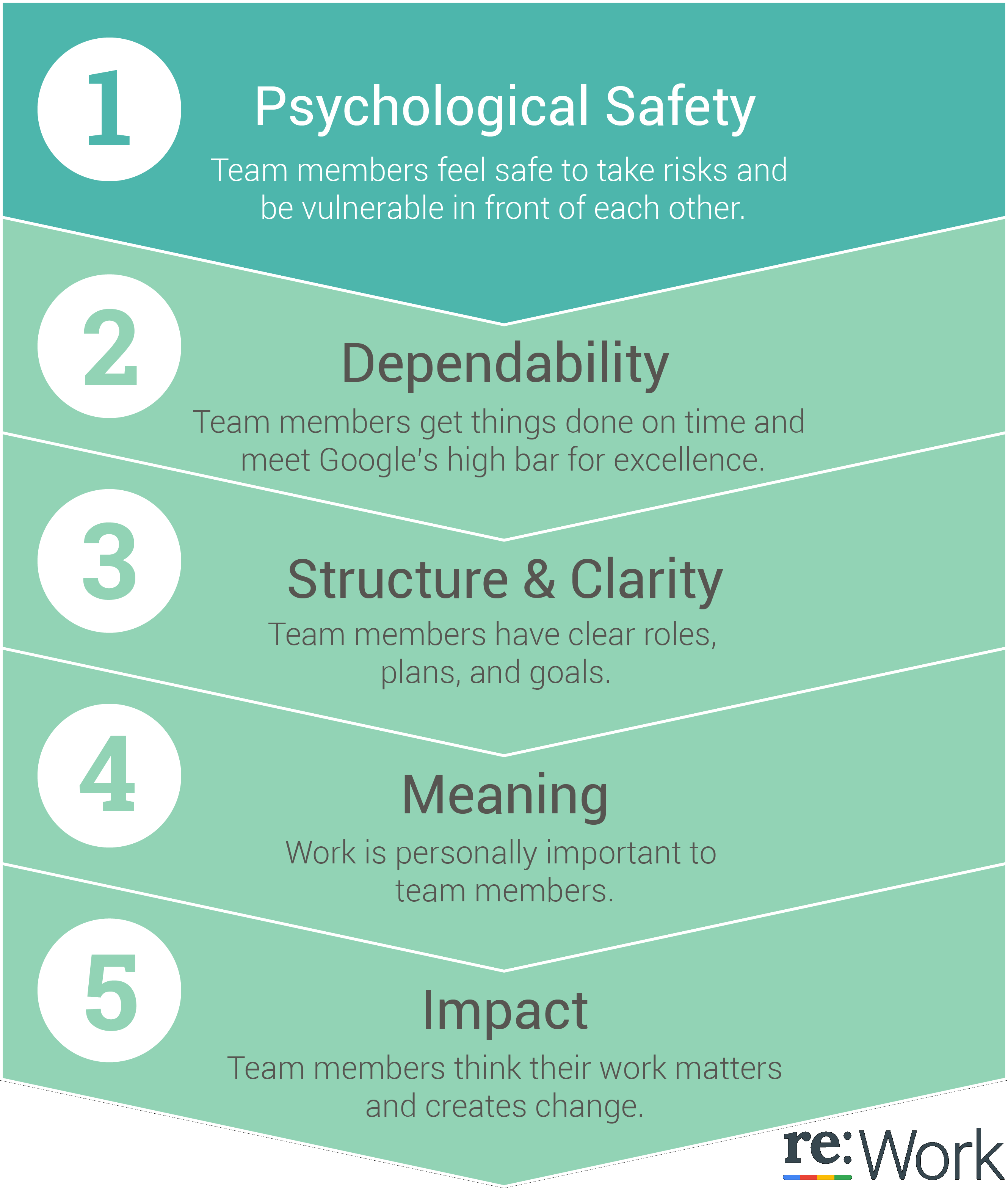
Google extensively studied what makes teams perform at a high level. They initially thought it would be things like diversity, manager’s influence or personality mix, but none of those traits or skills made any significant difference.

First, the most important aspect of a team that made them successful was when teams had an environment that promoted and sustained psychological safety.  When team members felt they could speak up without judgment or try new things and discuss possibilities openly, they thrived. 

Second, on the list of traits was trust in the ability of the other team members to deliver what was expected.  Both of these traits involve trust and developing trust amongst team members can be learned.

Third, properly setting goals and objectives were needed for teams to thrive successfully.  

Finally, two traits involved meaning and purpose.  When team members felt their project had meaning and purpose, they were motivated to excel.

Developing these skills needed to make successful teams can be learned.  Mindfulness teaches us non-judgment.  Non-judgment of ourselves and non-judgment of others.  This does not mean that we are not allowed to have an opinion; rather, we are not to judge ourselves or others as bad people for having an opinion or preference.  Non-judgment also means that when things do not turn out optimally, we refrain from judging ourselves or others as failures.  We then can shift our stance from failure to feedback.  What can we learn from this situation to move forward?

Mindfulness also teaches acceptance.  Acceptance of what is or has happened.  Acceptance is not having to like everything but rather accepting what is.  Acceptance releases us from the bondage of grasping and averting and desperately trying to control something we cannot.  When we release these grasping and averting tendencies, we open ourselves up to trusting ourselves and our abilities.  We can then bring this trust into our relationships with others.

Building trust amongst team members can be cultivated in several ways.  Compassion and perspective-taking meditation practices build skills that allow us to maintain a trusting mindset even in the face of challenges.

Our 4Steps™ approach will train you to develop many skills that will pay off in the future.

Practicing consistently is the key to mastering new skills.

The Science of Mindfulness

The Science of Mindfulness

The Science of Mindfulness

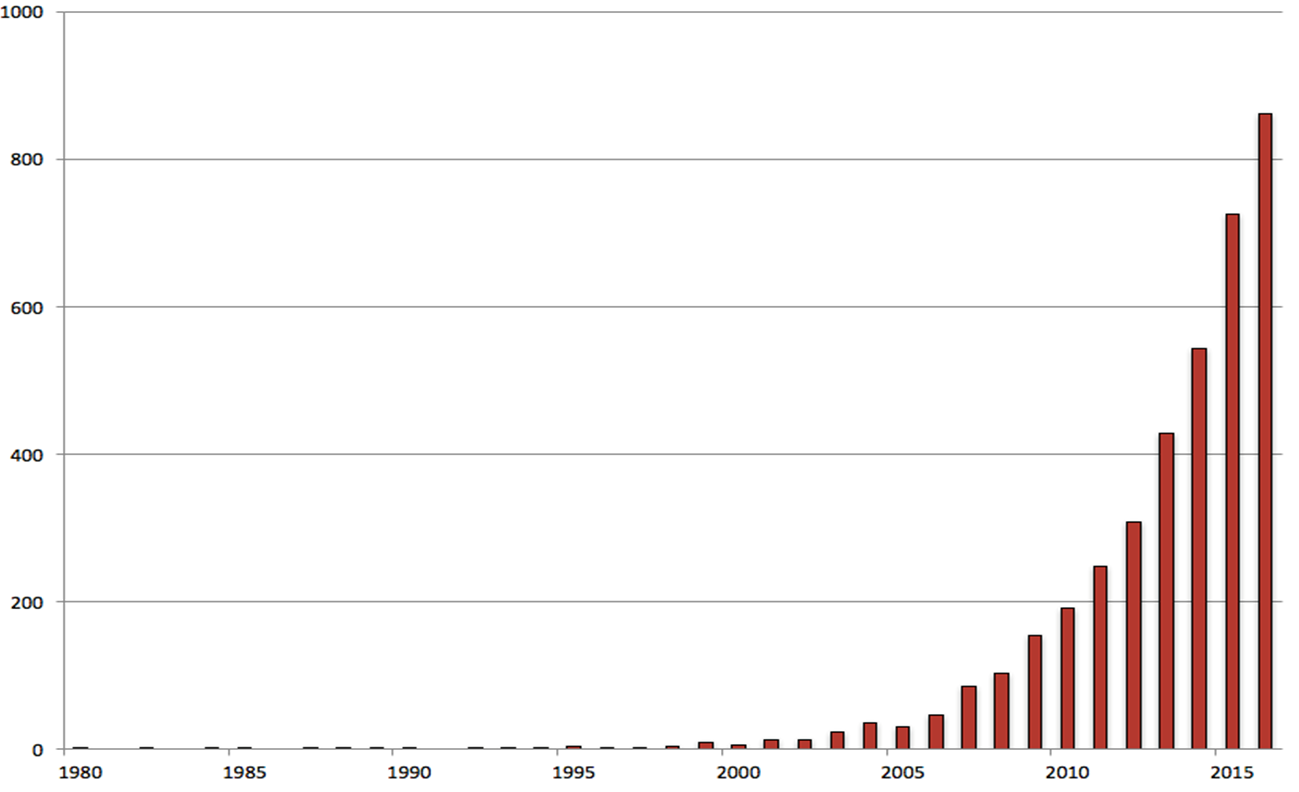
Mindfulness has been around for thousands of years and only recently has it come under scientific scrutiny.  Jon Kabat-Zinn was one of the first western researchers to look into the contemplative practices of Mindfulness and meditation to see if there is some usefulness to western society.  What began as a few studies in the late 1970s blossomed into close to 1000 studies in 2017.  Current research is centered on specific skills development measured in relationship to changes observed in the structure and function of the brain.

# of Mindfulness Studies Per Year – PubMed

Brain Science

Neuroplasticity is a concept that states that what we pay attention to and focus on (with regularity) changes the function and structure of our brains.  It’s only recently with the advent of Functional Magnetic Resonance Imaging (fMRI) scanners etc… that scientists are able to see changes occurring in real-time.  They are not only able to see active regions but also changes in the structure of those regions indicating permanent changes have occurred.

Judson Brewer and colleagues studied the DMN (Default Mode Network) a network of regions in the brain responsible for self-referential thinking and rumination.  Their findings suggest that meditation leads to both functional and structural changes in the brain resulting in increased attention control and decreased mind wandering.

Shaher and colleagues observed that compassion training could lead to several positive benefits.  With compassion training, researchers observed decreases in harsh self-thoughts, reduced depression symptoms and increased positive emotions.  Breines and Chen were able to demonstrate that when participants were reflecting on a negative self-assessment with a companionate stance, they were more inclined to think that change was possible, more inclined to make amends for past failings, more motivated to be near others who were motivated to change and were more likely to implement action to allow for change to occur.

From a neuroscience perspective, several studies have shown that empathy can be seen/measured in fMRI brain scans.  When comparing people in distress versus people viewing the distress (triggering empathetic feelings) several studies have demonstrated that the same neural network is activated in both groups (meta-analysis done by Decety, Lamm and Singer).  When groups were given compassion training (Klimecki et al) they discovered that there was an increase in positive affect while participants were witnessing people in distress. They also were able to note that different regions of the brain had increased activity in regions associated with positive emotions and affiliation.

Studies are continuing to pour out of research centers.  It’s clear that Mindfulness practices have many benefits however, one must also be careful not to overstate these claims and allow the scientific inquiry to lead them.  For a comprehensive look at the various studies and their claims, please read Altered Traits by Richard Davidson and Daniel Goleman.

Practicing consistently is the key to mastering new skills.

Increasing Focus and Productivity

Increasing Focus and Productivity

Increasing Focus and Productivity

The Science of Focus

A 2010 study conducted by Killingsworth et al, at Harvard University concluded that the average person’s mind wanders 47% of the time.  In addition they also found that a wandering mind is an unhappy mind.  Respondents were increasingly unhappy as their minds wandered away from a present-moment experience.  Finally, the Mindfulness Institute asked industry leaders about their ability to remain focused in meetings and over 70% said they had difficulty.

Translated into dollars mind wandering is costly. A person whose salary is $50,000 per year wastes $20,000 in lost productivity.  Check out the ROI of rolling out your own Mindfulness strategy if only to teach your employees how to become more focused on the task at hand.

What can we do?

In today’s world, distraction is everywhere and our employees and leaders are not immune.  Our always-connected mobile devices are compelling us to check emails, message each other, post updates etc., perpetually shifting our attention away from what is in front of us – our work!  We see this all the time.  Watch people walk down a street these days and increasingly, you will see them glued to their devices, not paying attention to what is going on around them.  This is only getting worse and not better.  GREAT NEWS is that we can do something about it.

Developing a Mindfulness culture in the workplace and teaching employees HOW to better maintain their focus and attention by a modest 10% can save a company thousands of dollars per year.

Practice Improves Focus

There are many studies that demonstrate that Mindfulness meditation exercises can improve our ability to focus and reduce mind wandering.  Sustained focus is concentration.  Judson Brewer and colleagues studied the Default Mode Network of our brain.  This is a network of regions engaged every time we “do nothing”.  It’s the network responsible for self-referential thinking and mind wandering.  Researchers studied novice and experienced meditators and compared the activity of this region while meditating.  They found that experienced meditators had less activity in this network, which seems to indicate an increased ability to prevent their minds from wandering.  Brewer and his colleagues also studied the connectivity pathways between the executive centers of the brain (the pre-frontal cortex), which is responsible for our cognitive functioning and the emotional centers (limbic system and amygdala) and they found that there was increased connectivity in the experienced meditators.  This seems to indicate an increased ability to regulate one’s own emotions through cognition.

Both findings together indicate that with Mindfulness meditation training, we can learn and train the brain to maintain focus/concentration in our everyday lives and when we are in a potentially distracting emotional state of mind.

Our 4Steps™ approach will train you so you can develop this skill.

Practicing consistently is the key to mastering new skills.

Reducing Stress and Increasing Well-Being with Mindfulness

Reducing Stress and Increasing Well-Being with Mindfulness

Reducing Stress and Increasing Well-Being with Mindfulness

How stressed are we?

According to a poll by Ipsos-Reid, 72% of Canadians experience uncomfortable stress levels. 26% of that stress is related to work life. The Canadian Mental Health Commission of Canada estimates that 30% of disability claims are related to Mental Health issues. The American Academy of Family Physicians claims that two-thirds of doctor’s office visits are for stress-related symptoms.  In the workplace, workplace wellness is a growing concern for many organizations.

Companies are beginning to recognize that they need to do something about workplace stress that goes beyond a casual recommendation to “see your doctor”.  Increasing workplace wellness and mental wellness initiatives help reduce stress.  Mindfulness has been shown to positively affect our general well-being and happiness.

The Science

Tania Singer at the University of Leipzig in Germany has extensively studied the positive effects of various meditative practices.  Insight meditation which cultivates the skills needed in perspective taking, i.e., seeing things as passing, and allowing closer examination of a particular experience, has been shown to reduce harmful stress hormones such as cortisol.

Jon Kabat-Zinn has been researching since the late 70’s, the benefits of stress reduction gained by various Mindfulness practices.  His program called MBSR (Mindfulness-Based Stress Reduction) is the granddaddy of intervention programs aimed at helping people better deal with anxiety and depression.  Many studies have shown that MBSR is as effective in dealing with anxiety and depression as many of the top anti-depression and anti-anxiety drugs.

Reduce Stress and Increase Well-being @Work

Forward-thinking wellness programs now recognize that they must go past the “break-fix” model for mental wellness.  Just like fitness encourages general physical wellness, Mindfulness practices increase general mental wellness.  Teaching your employees Mindfulness practices and encouraging and allowing them to practice their meditative practices at work has huge financial benefits.

Becoming more mindful allows employees to increase their ability to remain focused, become more resilient, adapt to change, listen and communicate more effectively and reduce their overall stress levels.  This, in turn, results in fewer sick days and reduced healthcare costs.

Practicing consistently is the key to mastering new skills.

Mindful Communication

Mindful Communication

Mindful Communication

Where are we now?

In our always-on always, connected world we think we are communicating more effectively and yet we are not.  We are easily distracted and our attention control is becoming worse.

A study conducted by Microsoft discovered that our attention spans are now less than 8 seconds – less than a goldfish.  We can see people hunched over and glued to their mobile devices everywhere we look.  Even while conversing, our attention is focused on something else, not the conversation. One study from the Mindful Leadership Institute found that 70% of leaders report being regularly unable to be attentive in meetings.  Generous listening and communication skills are fast becoming lost skills.

What is effective communication?

Communicating is a 2-way process and it starts with generous listening.  Generous listening is defined as giving someone the full gift of attention.  Too often, we are busy contemplating and formulating a response to someone way before they are finished making their point.  Howard Beckman and Melissa Mooney et al. studied how effectively primary care physicians communicated.  They found that after Mindfulness communication skills were taught and put into practice, the physician’s ability to remain focused and listen to their patients increased, resulting in a better diagnosis.

Effective communication also relies on the skill to become aware of how the other person may feel about a particular conversation.  Being more aware of our emotions makes us more empathetic to others.  This skill then fosters the ability to better meet the other person’s needs through tactful usage of words that would better compassionately address concerns and issues. In addition, we may often hide from having difficult conversations when we feel uncomfortable, thus removing our ability to communicate.  Being in tune with our emotions and the emotions of others allows us to build greater self-awareness and this in turn, results in better emotional regulation skills.  Our emotions drive our decisions and actions so knowing how we feel at any given moment and being Mindful of the underlying story allows us the ability to move past limiting beliefs and fears and move forward in a positive direction.

How can you improve?

There are a number of Mindful practices that can be taught to employees in order to increase communication skills.  Attention control and developing the skill to wait before responding are examples.  Increasing empathy and compassion skills also allows us to communicate without escalating a potentially negative situation.  The great news is these skills can all be trained. With a little practice and insight, they can become a permanent part of your approach to interacting with others.

Practicing consistently is the key to mastering new skills.

Mindfulness, Motivation and Goals

Mindfulness, Motivation and Goals

Mindfulness, Motivation and Goals

Achieving Our Goals

Motivating employees can be challenging.  Our leaders set objectives and managers are expected to keep everyone focused and motivated in order to achieve these goals.  What motivates our employees and what skills can managers use to keep everyone engaged?

Dr. Martin Seligman (the father of the Positive Psychology movement) has conducted extensive studies on what drives people to achieve their goals and be happy.  He points out that there are 3 main drivers.

First, there is what he calls a “pleasant life”.  This is where we search for nice experiences and things to increase the pleasantness of our lives.  Eating a nice meal, walking on the beach etc.  As it turns out this is a small driver because we get habituated to the nice things, and the pleasantness wears off over time.

Second, there is a “life of engagement”.  This is where we are in the “flow” of life.  Our perceived skills are in balance with our challenges and we expertly navigate our experiences without either boredom or anxiety.  This state of mind is very influential in keeping us motivated to move forward.

Finally, there is the “life of meaning”.  This is where our goals are in-line with our values and our perceived life’s purpose.  This also is a large driver of motivation.  If we want to have a life that inspires and motivates us and maintains our well-being and happiness, then we must understand what our key drivers are.  This is where Mindfulness comes in.

Mindfulness allows us to understand our stories and the stories of others.  Stories about what our skills are in relation to our challenges.  These are stories about what we perceive our skills to be and what we perceive our challenges to be.  Underestimating our capabilities, even the capability to learn what we do not know right now, places us out of flow and results in fear and anxiety.  Overestimating the challenges, exaggerating the severity and longevity, for example, also places us out of flow.

Mindfulness allows us to develop better self-awareness skills that in turn, allow us to understand our perceptions by questioning their accuracy.  Creating more balanced perceptions (stories) about our skills and challenges allows us to be in the flow state more often, thereby keeping us motivated toward our goals.  Mindfulness also allows us to understand our value system better and keep our goals in line with them, again keeping us motivated.  As managers need to be aware of not only our own perceptions but also the perceptions of our employees so we can effectively help guide them into a balanced state.  When balance is achieved, motivation flourishes and stress reduces.

Thankfully these awareness skills can be taught.  With insight meditation practices that uncover our stories to compassion practices that set the groundwork for moving forward in a supportive environment, managers and employees can learn to achieve not only their personal goals but organizational ones as well.

Practicing consistently is the key to mastering new skills.

Mindfulness and Customer Focus

Mindfulness and Customer Focus

Mindfulness and Customer Focus

Understanding our customers is the key to delivering products and services that meet their needs.  Product teams, customer service representatives, salespeople etc… all need to be in tune with their customers.  More precisely, they need to be in tune with how their customers are feeling about the experience of dealing with their organization.  They need to be in tune with their customers’ challenges to help them.  They really need to understand their needs in great detail.  Therefore understanding customers requires the skills of empathy and compassion along with other skills such as generous listening and effective communication skills.

Empathy is feeling what the other person feels, being with them and their emotions.  Since emotions drive all our decisions, it’s important to understand how your customers are feeling.  Empathy can be trained and teaching employees to recognize the similarities that exist between themselves and their customers allows them to have more empathy. Dan Eagleman a researcher at Stanford University studied the phenomenon known as in-group out-group bias.  When participants recognized that they had similarities with a person in distress they had an increase in empathetic feelings.

Empathy is not the only skill needed and too much empathy can also be a bad thing.  Being too in tune with someone else’s feelings can cause an increase in what researchers call empathetic distress.  This happens regularly with front-line workers for example.  A recent study in France found that 47% of call center employees reported at least one psychologically distressful incident in the past year. To inoculate oneself against empathetic distress, compassion training can be used as a buffering skill. There are many studies that show that Mindfulness and compassion training result in a decrease of stress hormones increase in positive emotional effects which result in the lessening of empathetic fatigue and increasing pro-social behavior. Behaviors such as teamwork, collaboration, helping others, less in-group/out-group behaviors etc… improve with Mindfulness and compassion training; Tania Singer et al. 2015. These skills and behaviors are very beneficial for employees as they deal with their customers as well as dealing with each other.

The great news is that empathy and compassion are trainable skills.  Neuroscience is showing that even adult brains change over time with practice.  Neuroplasticity tells us that what we focus on and pay attention to, changes the structure and function of our brains.  Over time these skills become easier and more automatic.

Several Mindful practices can be taught to employees to increase empathetic and compassionate skills.  When these skills increase, improved sustained customer focus is achieved and overall stress levels decrease.  Let us help you develop your Mindfulness strategy to help get your customer service levels to where they want to be.

Our 4Steps™ approach will train you so you can develop this skill.

Practicing consistently is the key to mastering new skills.

Mindfulness and Creativity

Mindfulness and Creativity

Mindfulness and Creativity

Where are we now?

A study conducted by Adobe (the graphics software company) found that 75% of the respondents felt that they were not living up to their creative potential. At the same time, another study conducted by Fast Company found that 60% of CEOs say that creativity is the most important skill for an employee.

Companies recognize that when employees are allowed to be more creative the company benefits.  Keep in mind that creativity is not something that resides exclusively in the art world.  Creativity is useful for any job, especially when applied to problem-solving.

What restricts creativity?

So why do many people feel they are not living up to their creative potential?  A study conducted by Dong I Jung found that several managerial methods can decrease one’s ability and motivation to be more creative, as it turns out that fear of failure limited people’s desire to try new approaches because of their fear of negative judgment and assessments for their managers.

All too often, when ideas come up that may be helpful to a team or company, employees censor themselves by discounting their ideas as worthy of discussion.  Fear of embarrassment and insecurity about their ability to make a difference is 2 reasons preventing them from speaking up.

Mindfulness Improves Creativity and Innovation

Mindfulness practices foster several skills to counter these limiting stories and allow employees to step out of their comfort zone and try new things.  Managers can also learn to be less judgmental and dismissive and spend more time investigating and evaluating different ideas. Through Mindfulness, we learn skills such as non-judgment and acceptance.  We see ideas as just that; ideas.  We release the need to equate a bad idea with the self-worth of ourselves or others.  We shift from a stance of failure when things do not turn out optimally to a stance of feedback, learning and improving from what has happened.  This shift changes our approach altogether and unleashes our creative potential. Mindfulness also teaches us that starting over is OK.  When we experience setbacks, we can begin again.  We can try a different approach and move forward repeatedly, improving along the way.

Allowing ourselves and others to experiment, play around, and think out of the box without the fear of getting the “failure” label frees us from that limiting self-talk and allows creativity to flourish.

The great news is that these skills and approaches are teachable.  It all starts with being more Mindful of what is happening around us and within us.

Our 4Steps™ approach will train you so you can develop this skill.

Practicing consistently is the key to mastering new skills.